
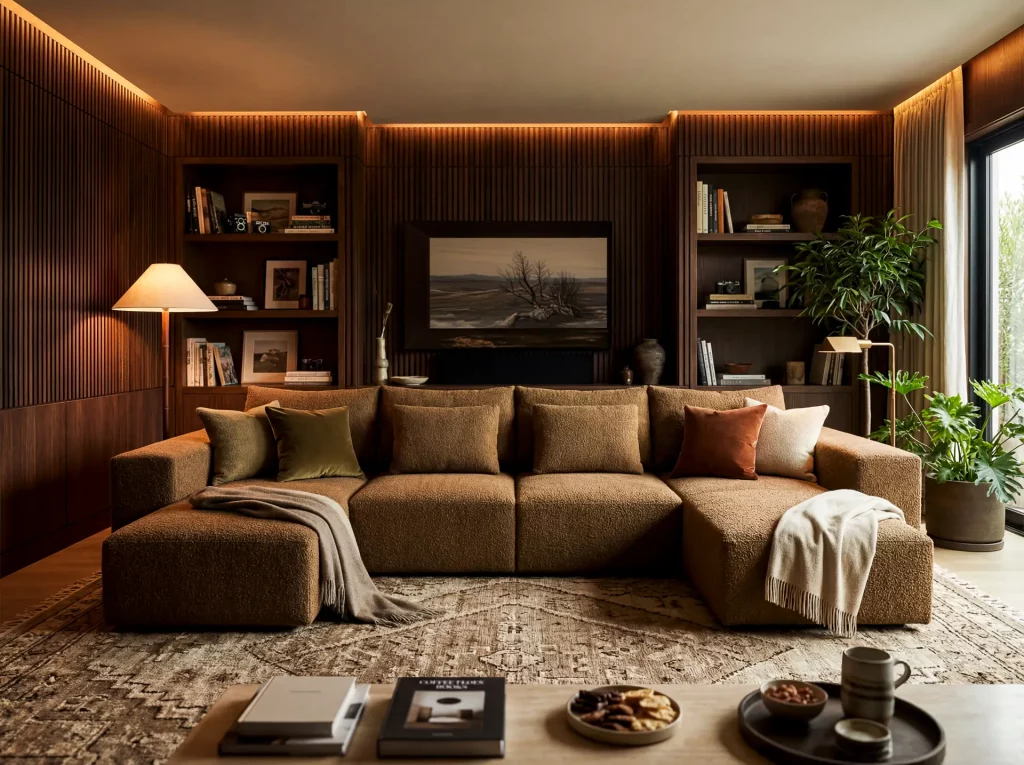
The way we watch, and the rooms we build to watch in, have quietly changed. Luxury home theater design is no longer about a single dark room with tiered recliners and a screen that comes alive only after the lights go down. The most thoughtful homeowners across Westchester County, Greenwich, Scarsdale, NYC, and the Hamptons are reimagining what a private cinema can be, and how it should feel to live in.
The Shift: From Watching to Living
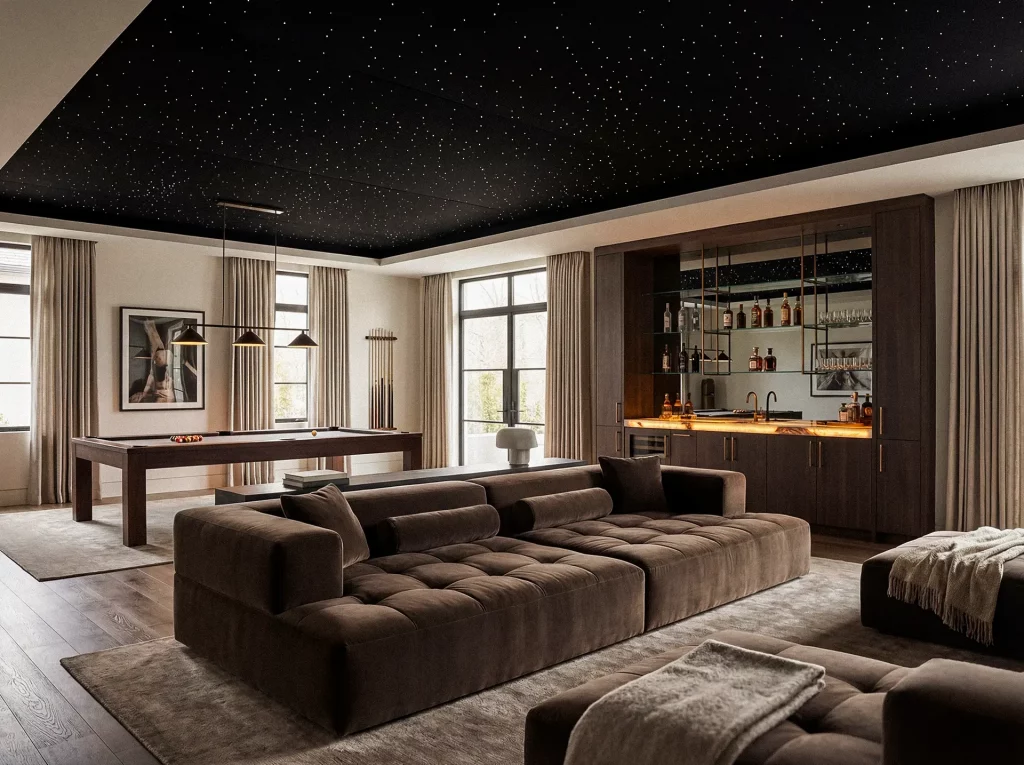
The best cinematic spaces are no longer built only for watching. They are built for living beautifully.
That single idea is changing the way luxury home theater installation gets approached at the design stage. Where dedicated theaters were once siloed behind heavy doors in basements, today’s spaces are integrated into the rhythm of family life, open to bars, billiard rooms, lounges, and adjacent gathering spaces.
The result is a category of room that didn’t exist a decade ago. A true cinema experience that doesn’t ask you to choose between performance and beauty.
Dedicated Theater vs. Media Room: Which One Belongs in Your Home?
This is the most common conversation we have with new clients in Armonk, Greenwich, and the Hamptons. Both rooms can deliver an extraordinary experience. They simply do different jobs.
The Dedicated Home Theater
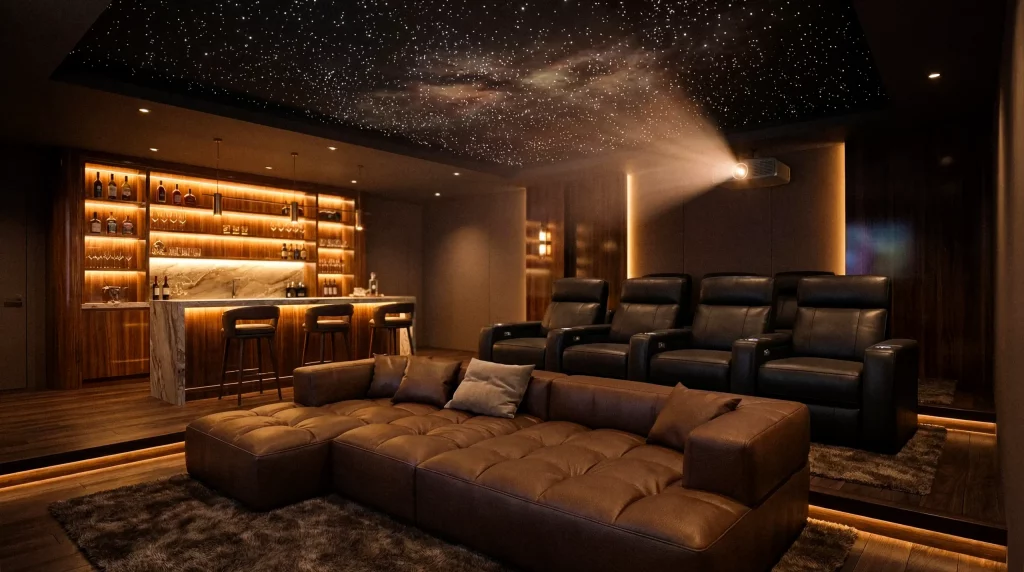
A dedicated theater is purpose-built. The room exists to serve the screen. Walls are acoustically treated. Lighting is layered and dim-controlled. The ceiling often features a starlit fiber-optic field. Seating is tiered, often on risers, with sightlines engineered to the inch.
This is the room you build when you want a true cinema-grade experience at home. When you regularly watch films with friends, host screening nights, or want a space that delivers reference-level picture and sound regardless of the time of day.
A custom home theater is also where the highest-performing technology lives. A Sony projector throwing onto a 120-inch screen, a fully calibrated surround sound installation with hidden speakers behind acoustic wall panels, and a Savant home theater control system that runs the entire experience from a single touch.
A dedicated theater is the right answer when:
- You watch films seriously and want reference-grade performance
- You have basement square footage or a separate room you can commit
- You want a true blackout environment
- You see the room as an event destination, for guests, kids, or both
The Luxury Media Room
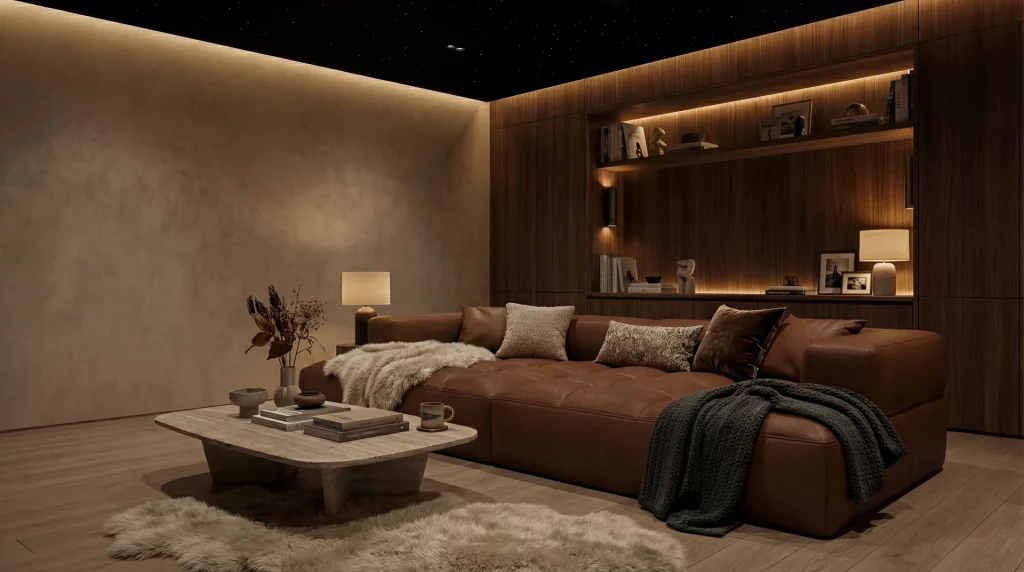
A media room is more flexible. It lives in daylight. It does more than one job. It’s where the family lands on a Sunday afternoon, where conversation happens between innings of the game, where a movie might play one night and a dinner party might happen the next.
The shift toward luxury media room design is one of the biggest changes in the industry. Modern media room ideas have moved away from the formal theater aesthetic entirely, embracing wider sectionals, warm materials, layered architectural lighting, and screens that disappear when not in use.
This is where partners like CinemaTech are leading. Their Greenwich and Montclair collections trade traditional stadium recliners for sculpted, lounge-driven CinemaTech seating. Wider, lower, and built to support more than one moment.
A media room is the right answer when:
- The room has windows or shares space with another living area
- The family wants flexibility, including movies, gaming, hosting, and hanging out
- You want the room to feel like part of the home, not separate from it
- Comfort and conversation matter as much as picture quality
For many of our clients in Westchester County and Fairfield County, the answer is actually both. A dedicated theater downstairs, a family media room upstairs. Each one tuned to a different rhythm of the home.
What Makes a Room Cinematic:
The Five Layers
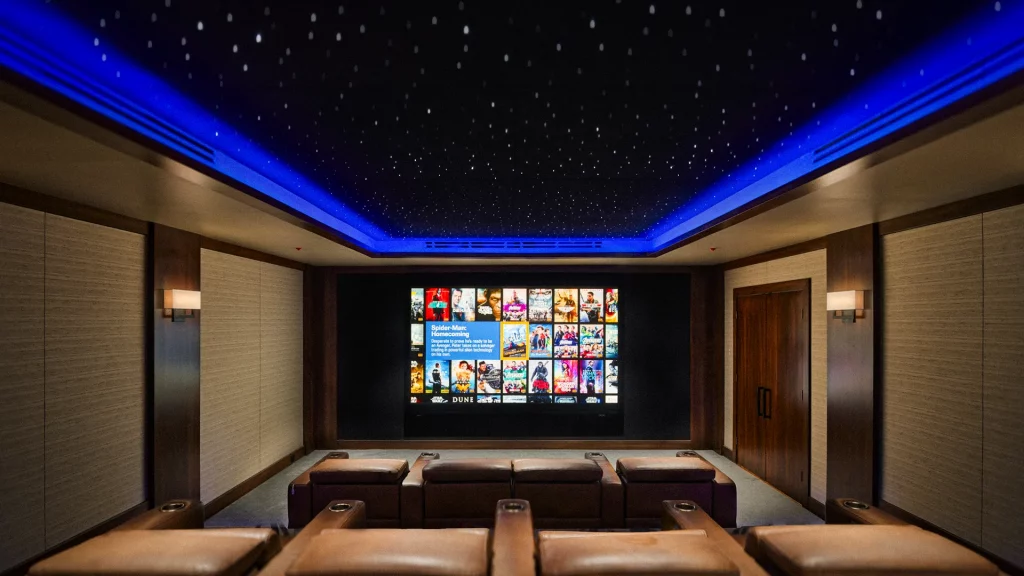
Whether you’re designing a dedicated theater or a multi-purpose media room, the same five layers separate a great room from a forgettable one.
1. Seating That Anchors the Room
Home theater seating is the most visible decision you’ll make, and the one most homeowners regret if they get it wrong. Traditional recliner rows can feel rigid in a residential setting, especially in a media room that lives during the day.
CinemaTech seating, handcrafted in the USA since 1998, has redefined this category. They offer both classic theater rows for dedicated cinemas and the lounge-driven Greenwich and Montclair sectionals for media rooms. The materials matter. Top-grain leathers, performance fabrics, and Alcantara that hold up to family life without losing their hand.
2. Acoustics That Disappear
The best surround sound installation is the one you don’t see. Acoustic wall panels, wrapped in fabric to match the room’s design language, absorb reflections without announcing themselves. Hidden speakers integrated into walls, ceilings, and even behind acoustically transparent screens deliver immersive audio with zero visual footprint.
This is where home cinema design separates the professionals from the retailers. A poorly designed room with great equipment will always lose to a well-designed room with appropriate equipment.
3. The Right Picture for the Right Room
A dedicated theater asks for a Sony projector and a properly proportioned screen. A media room often calls for a high-performance LED display. The kind that holds its picture in daylight and disappears into millwork or behind motorized art when not in use.
Choosing the wrong display for the room is one of the most common mistakes we correct in NYC and Greenwich projects. The room dictates the technology, not the other way around.
4. Lighting That Sets the Mood
Home theater lighting is where the experience comes together. Smart lighting control, paired with motorized shades for media rooms, lets the room transition from bright Saturday afternoon to full cinema mode in a single touch. Cove lighting, sconces, and starlit ceilings build mood without ever competing with the screen.
For media rooms, lighting is even more critical because the room serves multiple purposes. The same space needs to support reading, conversation, gaming, and viewing, each with its own scene.
5. One System That Runs It All
The final layer is what ties everything together. A smart home theater system that controls lighting, shades, audio, video, and climate from a single interface. A Savant home theater integration, or any well-designed control platform, eliminates the four remotes and three apps that used to define home cinema. One press, and the room transforms.
This is also where whole-home entertainment becomes possible. The ability to start a film in the theater, pause it, and pick it up on the kitchen TV or pool deck without missing a frame.
Where the Best Rooms Live in Westchester, Greenwich, and the Hamptons
Geography shapes design. The luxury basement ideas we develop for an Armonk colonial look different from the open-concept media rooms we design for a Hamptons summer home, and different again from the family media room tucked into a Scarsdale Tudor or a Greenwich shingle-style.
What they share is intention. Every room is designed around how the family actually lives. Their rhythms, their guests, their viewing habits, their architecture.
A multi-purpose media room in NYC might need to fold gracefully into a great room. A dedicated cinema room design in Greenwich might be the social hub of an entertainer’s basement. A Hamptons media room might need to handle both summer Sunday afternoons with sand-covered kids and quiet off-season evenings with two adults and a glass of wine.
The room is always designed to the life, not the other way around.
Designing Your Room: Where to Start
The biggest mistake homeowners make is choosing equipment before they’ve designed the room. Speakers, screens, and seating get specified in isolation, then assembled in a space that wasn’t built to host them.
The better approach starts with three questions:
- How will this room actually be used? Be honest. The answer dictates everything.
- Who is in the room? A family of four with young kids is a different brief than empty-nesters who entertain.
- How does the room need to feel? Cinematic and immersive, or warm and lived-in?
From there, the right team of integrator, designer, architect, and builder can work backward into seating, acoustics, screen, lighting, and control.
Frequently Asked Questions
What’s the difference between a home theater and a media room?
A dedicated home theater is a single-purpose room engineered around the screen, typically with tiered seating, acoustic treatments, controlled lighting, and a projector-based system. A luxury media room is a multi-purpose space designed for film, gaming, and family life, usually with flexible seating, a high-performance display, and architectural lighting that supports multiple uses.
How much does a luxury home theater cost in Westchester or Greenwich?
A custom home theater in Westchester County or Greenwich typically ranges from $75,000 to $500,000 and up, depending on room size, finishes, equipment tier, and integration scope. Media room projects generally start lower because they reuse existing room architecture. The right answer depends on your room, your goals, and the level of design integration you want.
Can I have both a theater and a media room?
Yes, and many of our clients in Armonk, Scarsdale, and the Hamptons do exactly that. A dedicated theater handles serious viewing and entertaining. A family media room handles everyday life. The two rooms serve different purposes and rarely compete.
What seating brand do you recommend?
Elevated Integration partners with CinemaTech, the gold standard in luxury home theater seating since 1998. Their Theater Collection is built for dedicated cinemas, while their Greenwich and Montclair collections offer lounge-driven seating ideal for modern media rooms.
Do I need acoustic wall panels in a media room?
Not always. Dedicated theaters require acoustic treatment to perform at reference level. Media rooms benefit from selective treatment, usually concealed within the room’s design, but rarely need full acoustic build-out. The right approach depends on the room’s geometry, materials, and how the space will be used.
Begin Your Design
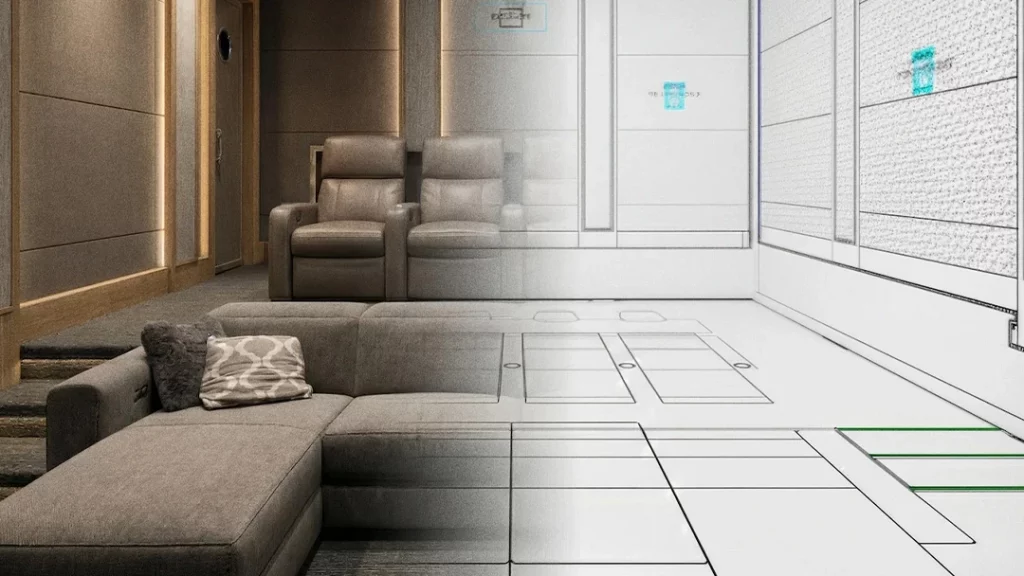
The most beautiful rooms we design start with a conversation, not a quote.
Whether you’re planning a dedicated theater in a new build, reimagining a tired basement, or designing a media room that needs to live as gracefully as it entertains, our team partners with architects, designers, and builders across Westchester County, Fairfield County, NYC, and the Hamptons to bring the room to life.
Now designing private theaters and media rooms for Spring & Summer 2026.
Schedule a private design consultation →
Elevated Integration 5 North Greenwich Road, Armonk, NY 10504 getelevated@elevatedintegration.com