
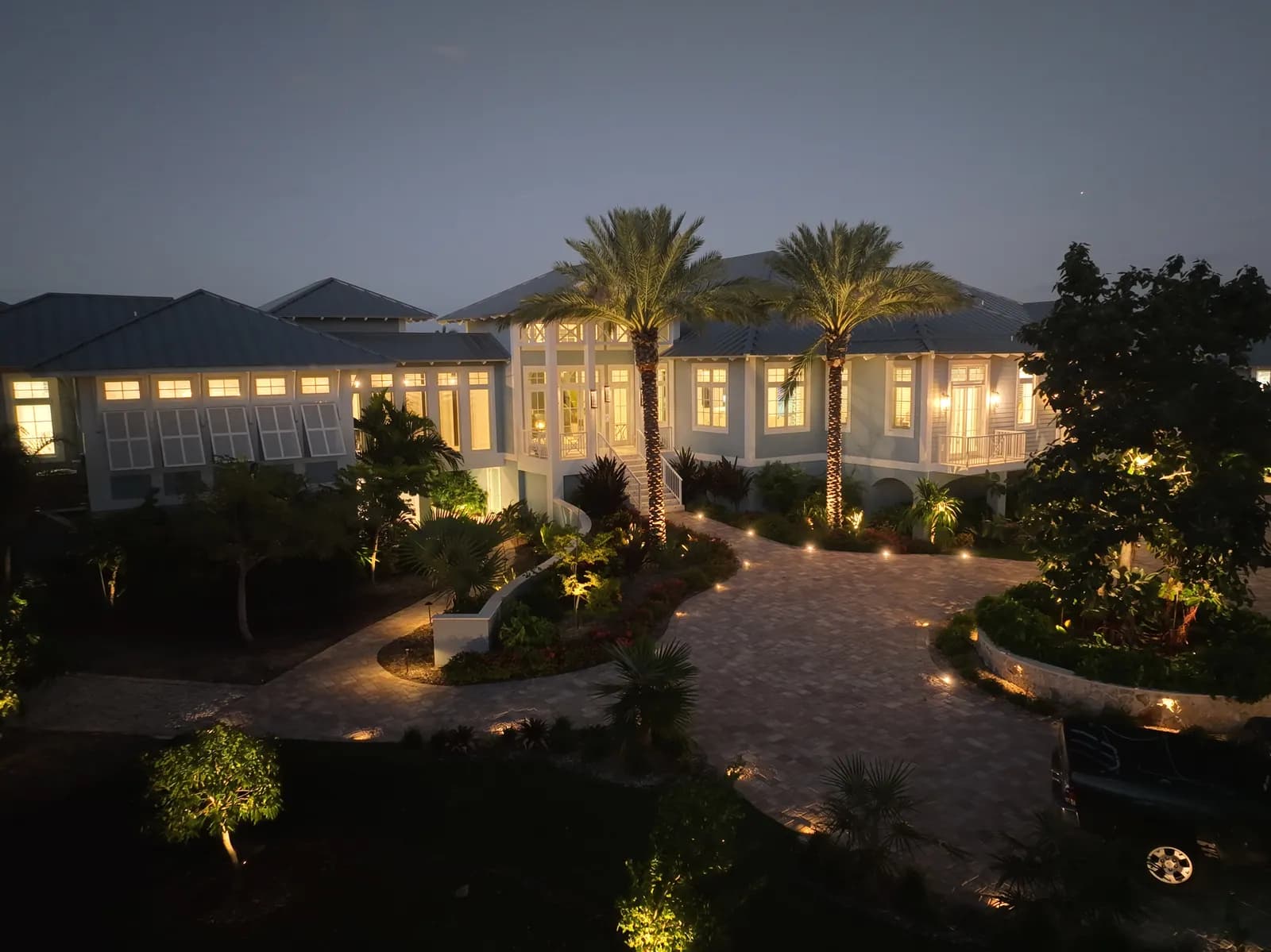
A landscape has a second life at night, and lighting is how it is drawn. Done poorly, it is a pair of bright floods that flatten the front of the house and leave the rest dark. Done well, it is depth: layers of light and shadow that let a property read as one composition after the sun goes down. The craft is not in brighter fixtures. It is in more considered ones, placed in layers, and kept out of sight.
Here is how we think about it, and how we approach every landscape lighting design.
1 — Uplight the architecture and the trees
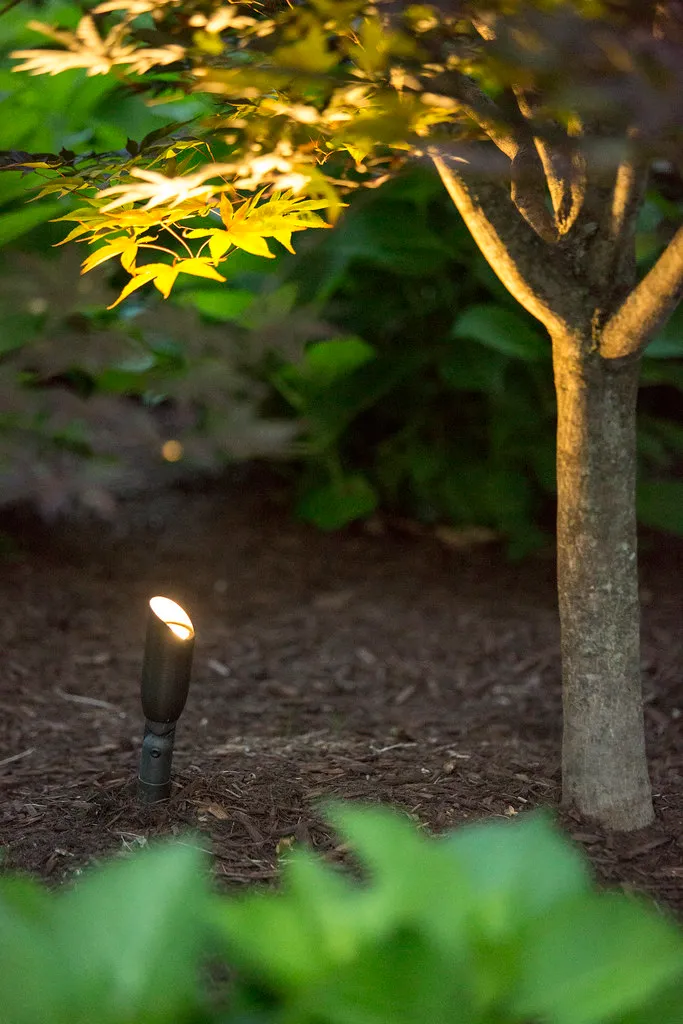
Start with the vertical. A wash of warm light up a stone façade, a specimen tree lit from beneath so the canopy glows, a row of columns lifted out of the dark. Uplighting gives a landscape height and drama, and it is the layer that makes a house look designed rather than simply switched on. The fixtures sit low and hidden in the beds; you see the lit tree, never the light.
2 — Downlight for moonlight
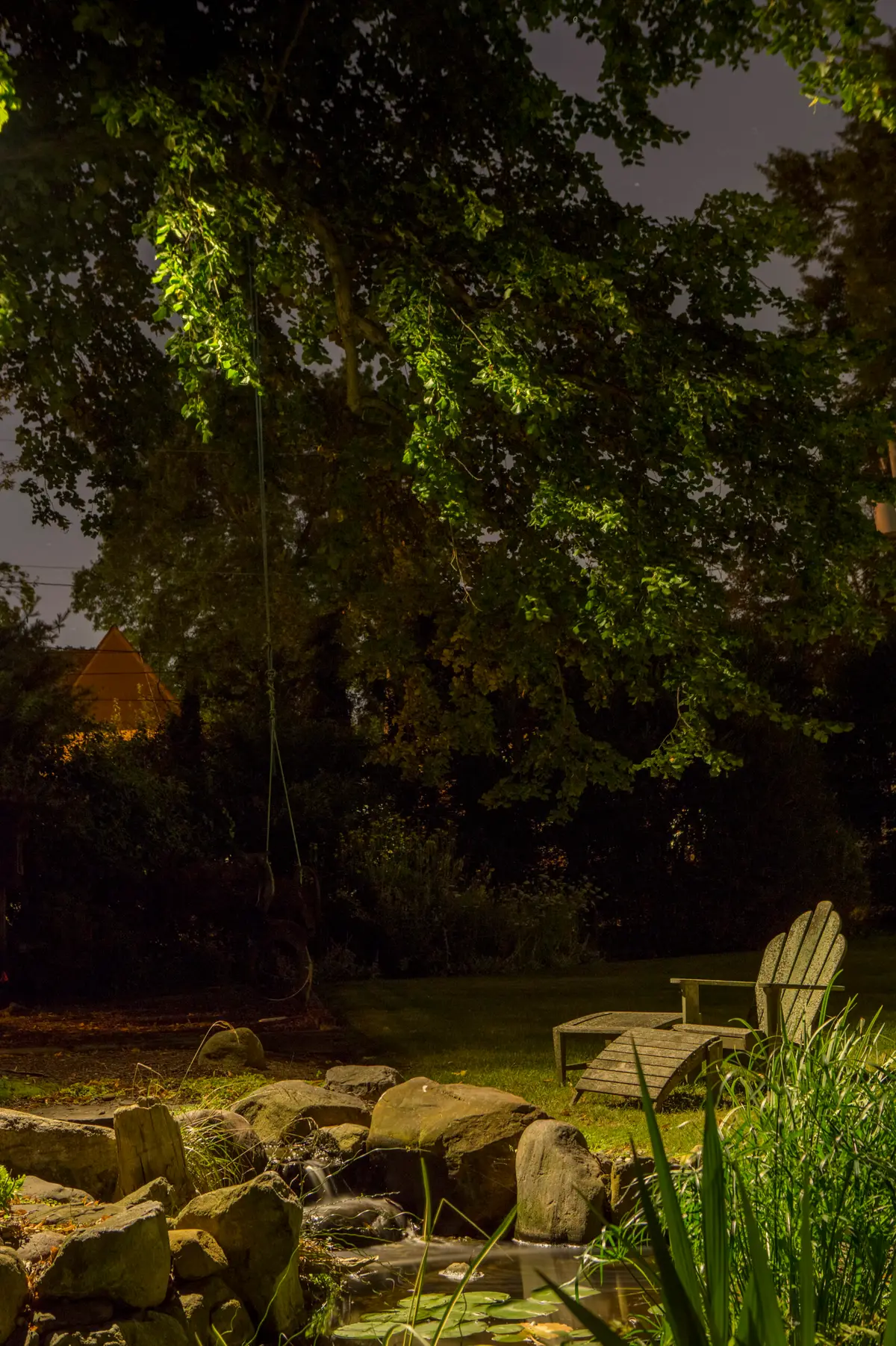
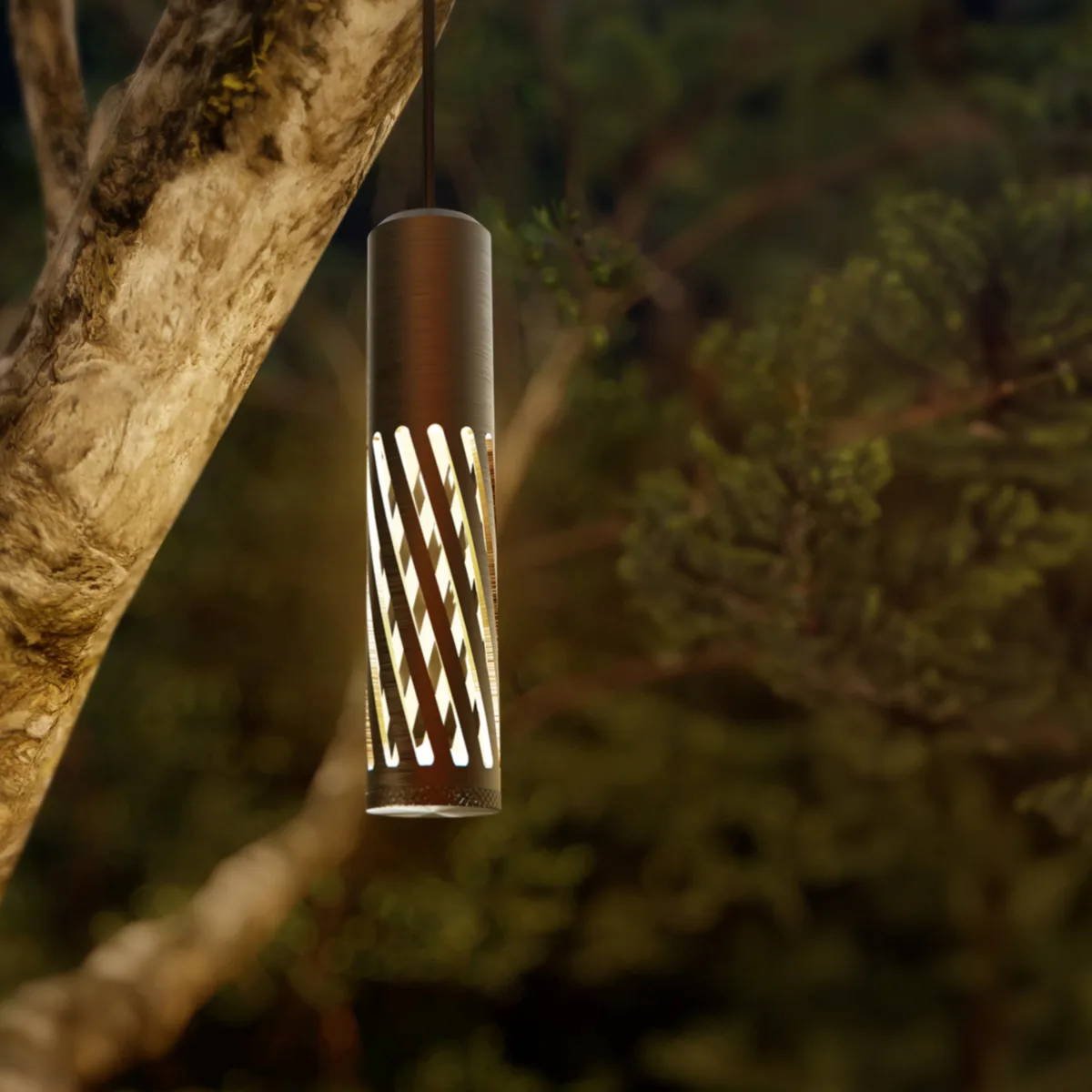
The most natural light outdoors comes from above. Mount fixtures high in a canopy or on the architecture and aim them down, and you get soft, dappled light across a lawn or terrace, the effect of a full moon through leaves. Moonlighting is quiet and flattering, and it is what keeps a lit garden from feeling like a stage.
3 — Light the path, not the fixture
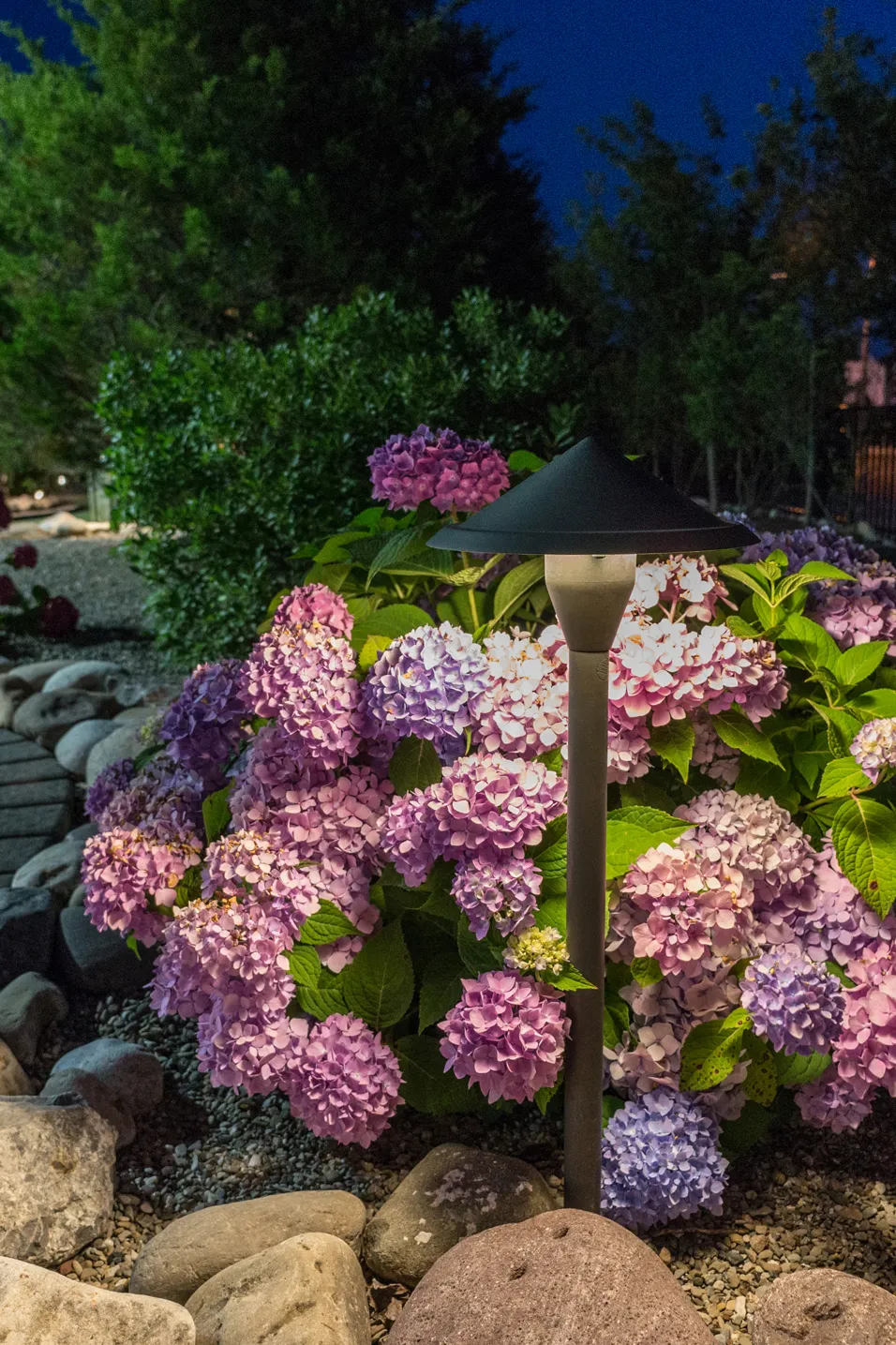
Along walks, steps, and beds, the light should be low, warm, and shielded, so you read the path without ever finding its source. This is where cheap installations give themselves away: a runway of glaring bollards. The right path light throws a soft pool at your feet and disappears.
4 — Graze for texture; wash for calm
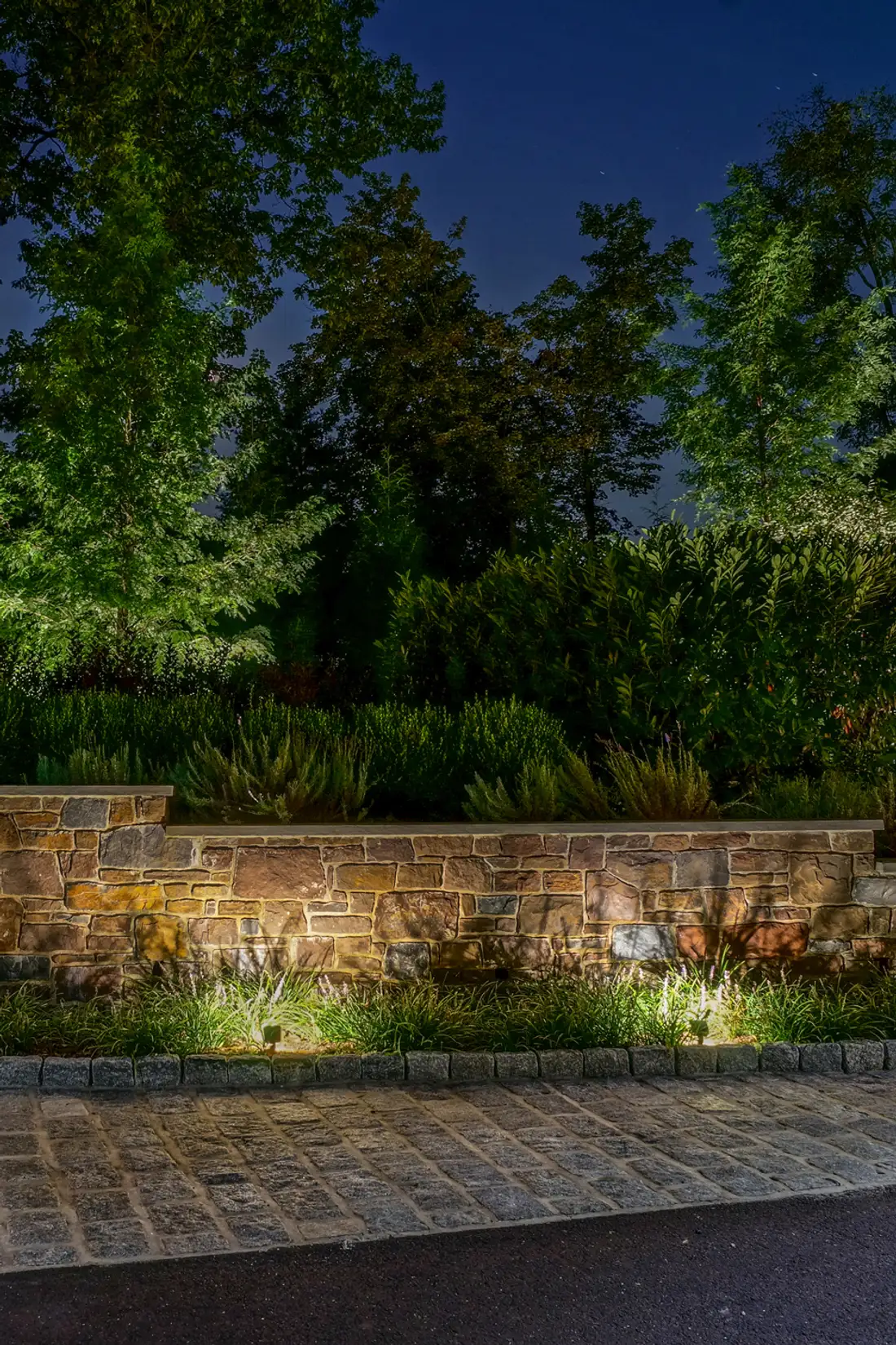
Bring light in close and parallel to a stone wall or a shingled façade and it rakes across the surface, pulling out every texture. That is grazing. Pull it back and spread it and you get an even, quiet wash across a garden wall. One adds drama, the other calm, and a good scheme uses both.
5 — Build light into the hardscape
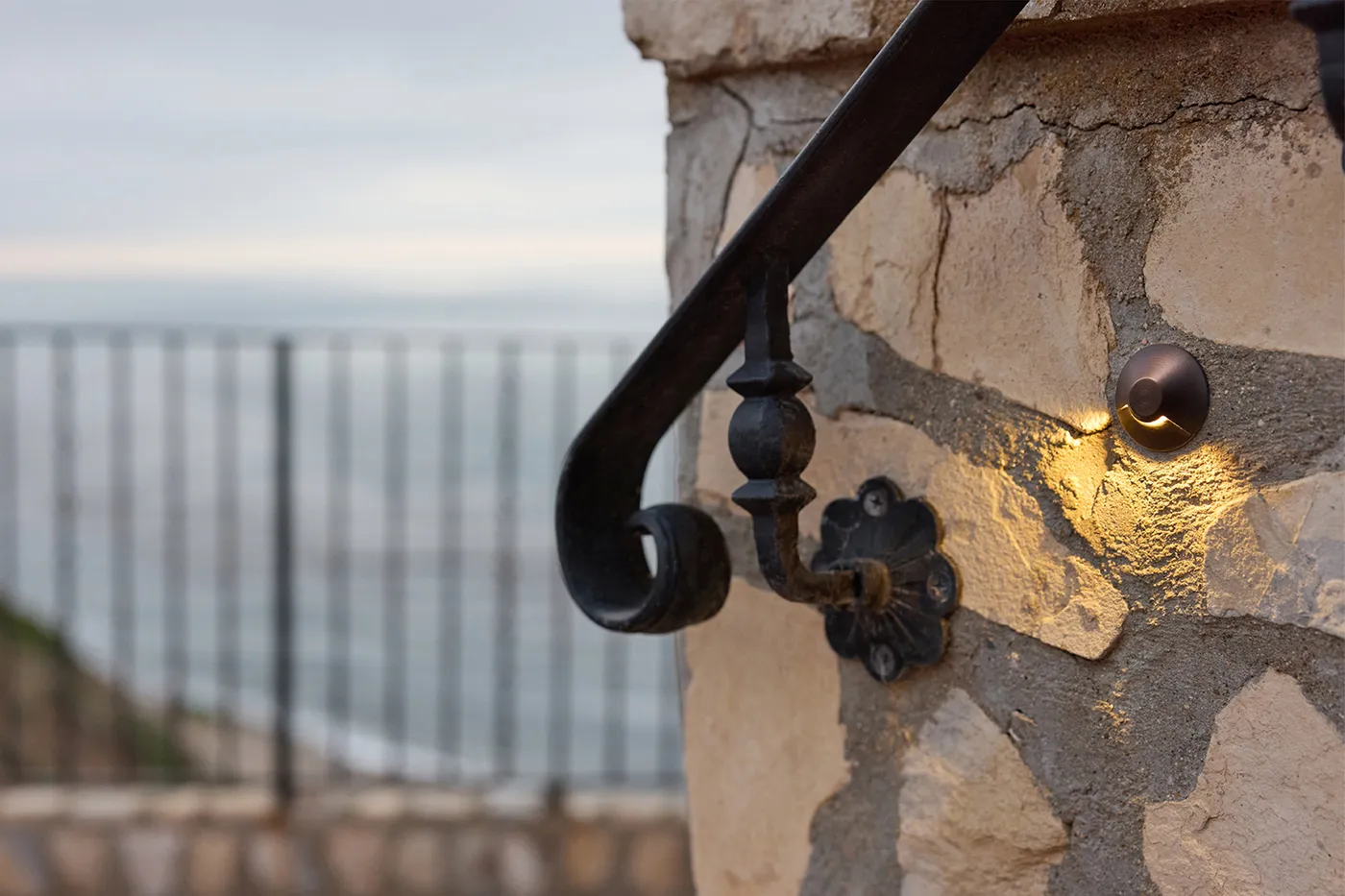
Steps, seat walls, and stone piers can carry their own light, small fixtures set into the structure for safety and a low, hidden glow. It is the layer people feel more than notice: a terrace that is simply easy to move through after dark.
6 — Finish with in-grade and water
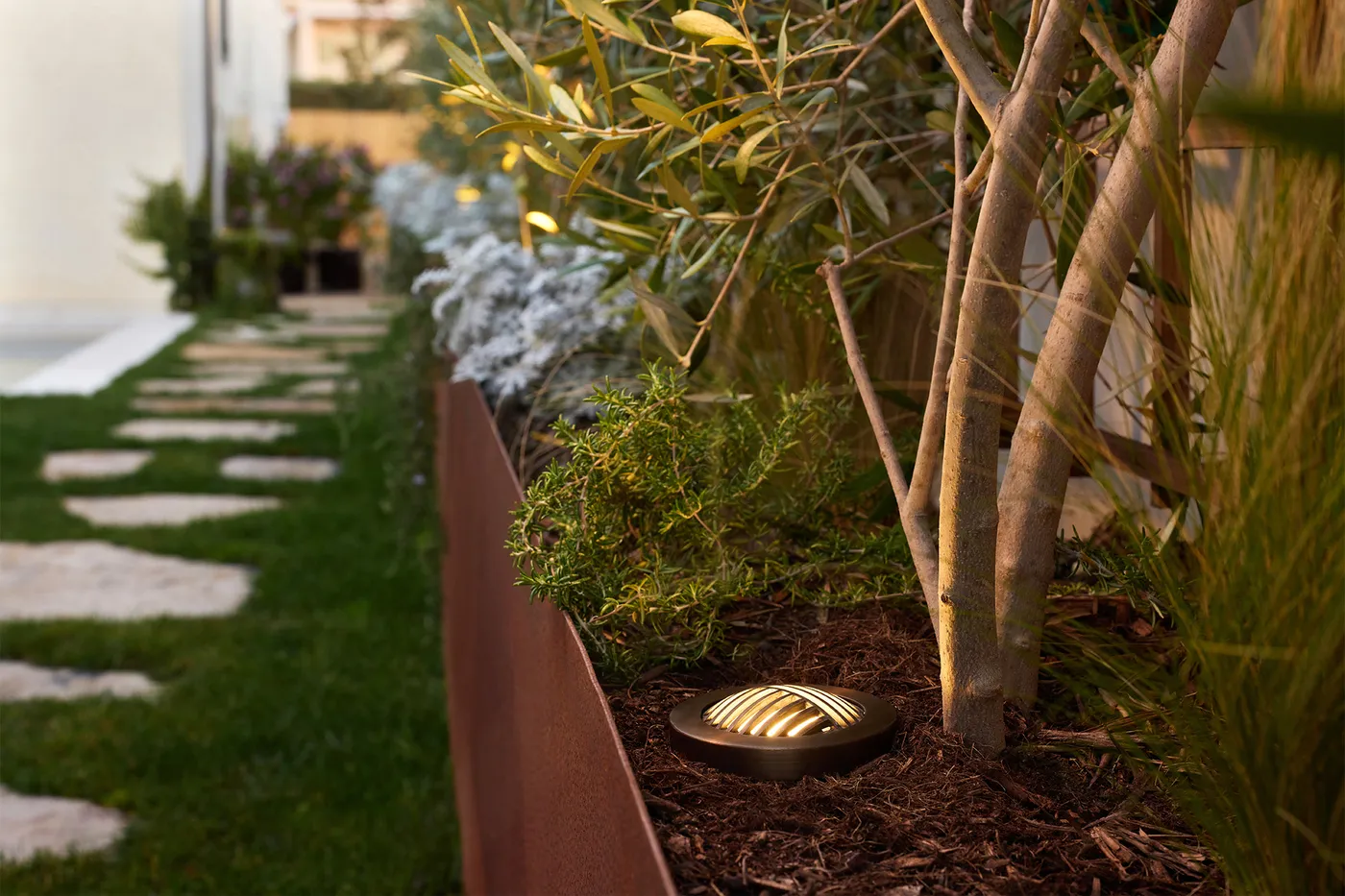
Flush, in-ground fixtures uplight from the lawn itself, and light brought to a pool or water feature gives a property its last layer: movement and reflection. Used sparingly, it is the detail that makes the whole scheme feel complete.
A word on restraint
The temptation is always to light more. The discipline is to light less. Warm colour temperature, low glare, and dark-sky-considerate aiming keep a property elegant and keep the night sky intact. A landscape lit with restraint feels expensive. One lit to the maximum feels like a car lot.
The material matters
None of it lasts if the fixtures do not. We build in solid marine-grade brass (no plastic to yellow, no housings to rust) on Coastal Source's EVO platform, so fixtures weather to a living patina and can be serviced and re-aimed in place as the garden grows. The wiring is buried and joined with the patented, waterproof Coastal Connector: no junction boxes to corrode, no failure point to dig up in five years.
One system, dusk to dawn
Finally, it should run itself. On Savant, the whole scheme becomes scenes: an evening setting, a setting for a party, a low setting for late, with an astronomic timeclock that follows sunset through the seasons and a single dial to take the property warm and low. The same buried platform carries the outdoor sound, and the same app that runs the house runs the grounds.
Layered, warm, and hidden
That is the whole of it. It is also exactly what we design and install, in brass built to last, across our markets from Westchester to the Hamptons. If you are planning a garden, or rethinking one after dark, start with the grounds.
All photography: Coastal Source. Elevated Integration is a Coastal Source Certified Installer.