Skip to content
Elevated Integration, Technology, made quiet.

Private cinema

In partnership with CinemaTech

Home Theater


We build rooms that vanish until the moment they matter, then deliver a picture and a sound that belong in a screening suite, not a den.

A great theater is an act of restraint. The equipment lives elsewhere, the speakers hide behind acoustically transparent fabric, and light and shade come under control, so the only thing left in the room is the film. We design the space with your architect from the first drawing (riser heights, screen geometry, seating throw) so nothing is retrofitted and nothing is compromised.

We design and build our theaters in partnership with CinemaTech, whose seating, acoustics, and finishes set the standard for the private cinema.

The range

Browse the room, then the elements that define it.


A dedicated theater or a media room, and the signature elements (seating, ceiling, acoustics, light) that turn a room into a private cinema.

Rooms

A dedicated home theater with tiered seating and a screen that fills the field of view

Home Theater

The purist's room.

A dedicated, light-controlled cinema built to a single standard: the picture and sound the director intended, with nothing in the way. Tiered seating, acoustic walls, a screen that fills the field of view, and a room engineered so the only thing you notice is the film.

Best for: A dedicated room, the serious cinephile, no compromise.

A luxury media room with a large screen that stays a place to gather

Media Room

Cinema that lives in daylight.

A room you use every day that becomes a theater when you want it. Big picture and real sound in a space that's still a place to gather, for the game, the finale, or a film on a Tuesday. Shades and lighting move it from bright and social to dark and cinematic on one press.

Best for: A multipurpose room, families, everyday use.

Signature elements

CinemaTech motorized swivel cinema seating in a private theater

Swivel Chairs

Every seat, facing the screen.

CinemaTech's motorized swivel seating turns to face the screen and back again, so a media room seats a crowd around the coffee table one moment and a full audience the next. Hand-built, in the leather and finish you choose, with the mechanism hidden inside.

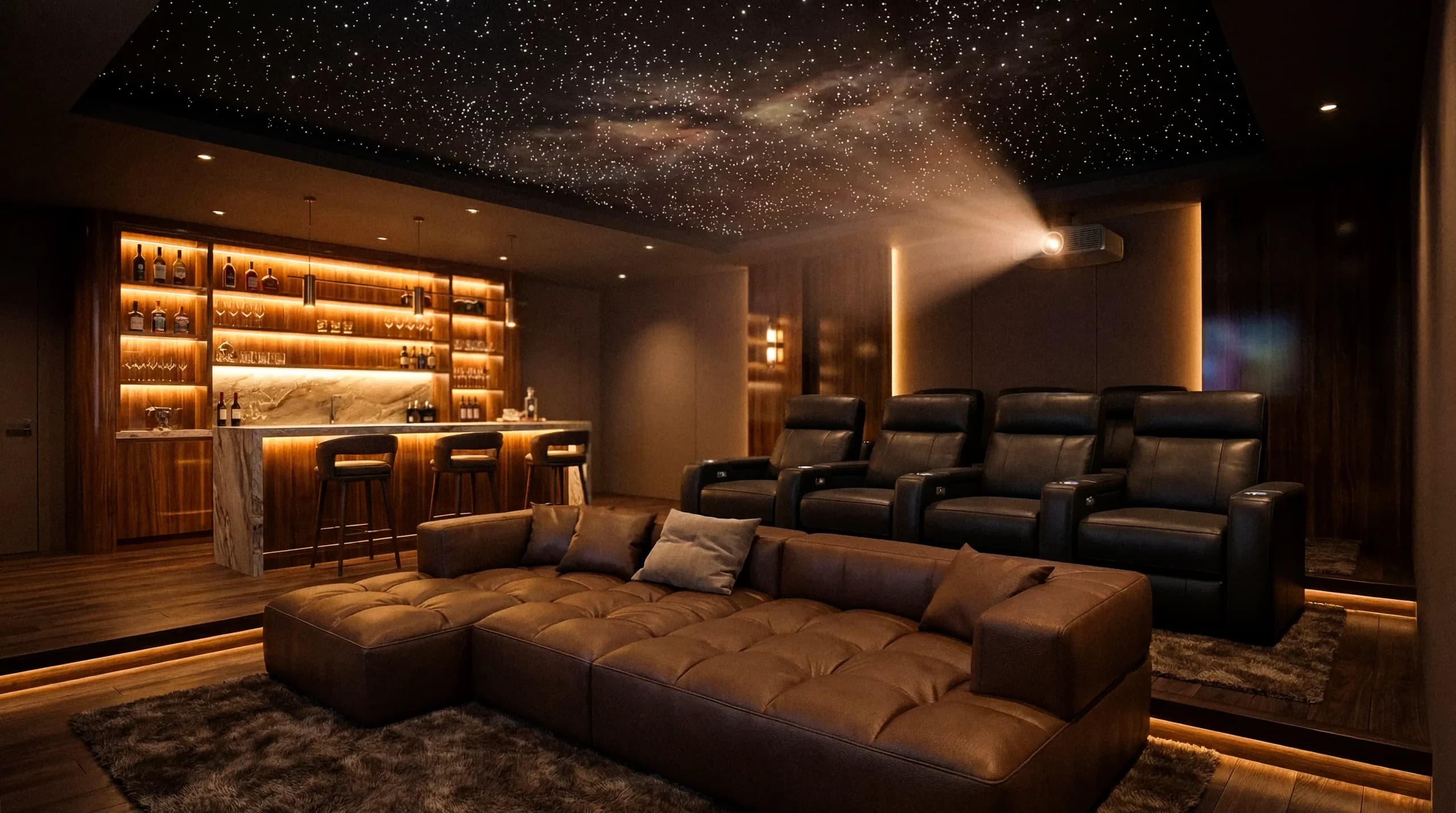
A fiber-optic starlight ceiling glinting above a home theater

Starlight Ceilings

A private night sky overhead.

A fiber-optic star field set into the ceiling: constellations that fade up as the lights fall, a slow twinkle above the screen. The detail that turns a good theater into one people remember.

Acoustic wall treatment engineered into a home theater's design

Acoustic Design

Engineered, not decorated.

Isolation and treatment calculated to the room, so the sound is full inside and quiet next door. Panels and finishes chosen to disappear into the design.

A home theater with cove and step lighting dimmed for a film

Ambient Lighting

The room, dimmed to the film.

Sconces, cove light, step lighting, and shade automation on scenes. The room lowers itself into cinema and comes back up when the credits roll.

How it's built

The build, step by step.


  1. 01

    Consultation.

    We start with how you'll use the room and the level you're after.

  2. 02

    Design.

    The room is drawn (sightlines, seating, screen, acoustics) with your architect and designer, and with CinemaTech on the elements that define it.

  3. 03

    Acoustic engineering.

    Isolation and treatment are calculated, not guessed, so the room sounds right and stays quiet next door.

  4. 04

    Pre-wire.

    Infrastructure goes in early, planned into the structure.

  5. 05

    Installation.

    Equipment is concealed; the room stays the room.

  6. 06

    Calibration.

    Picture and sound tuned to reference, measured, not eyeballed.

  7. 07

    Service.

    We stay on, so the room works every night you want it.

Under the surface

A theater is only as good as what you don't see.


Reference projection and laser light, screens sized to the room, object-based sound placed around you, acoustic treatment engineered to the space, and every box hidden. The technology is total; the room shows none of it.

Projection & laser light

Laser projection sized and throw-matched to your screen and the room.

Reference screens

Screens specified to the seating distance and calibrated to the frame.

Object-based sound

Speakers placed around and above you, so sound moves through the room.

Acoustic treatment & isolation

The room decoupled and treated, full inside, quiet next door.

Lighting & shade automation

Scenes that lower the room into cinema and bring it back on cue.

Hidden equipment

Racks and gear live elsewhere; the room itself shows none of it.

Pairs with Lighting Control, Motorized Shading, and Whole Home Audio. For a dedicated two-channel listening room, see Hi-Fi.

Selected work

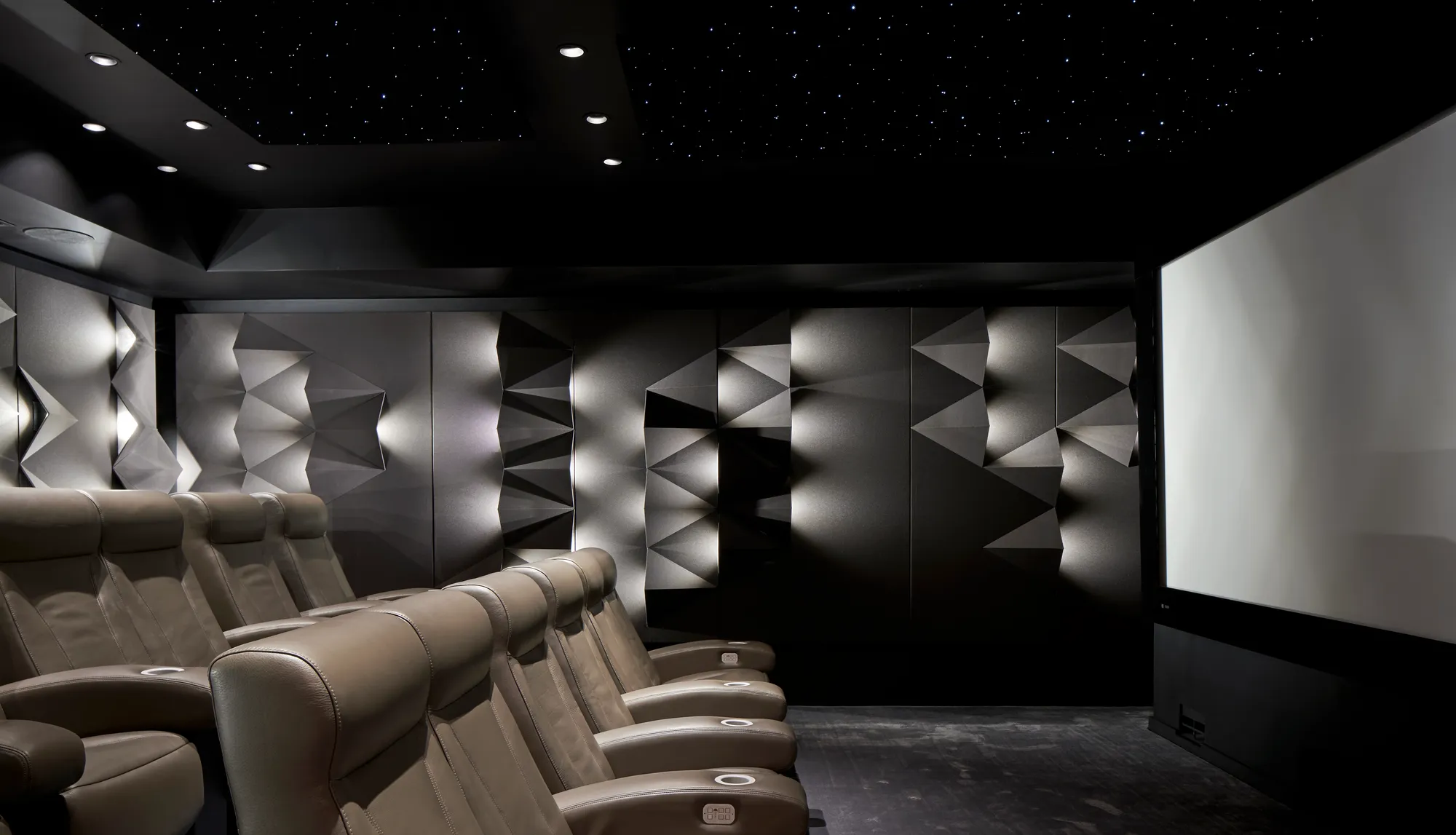
A dedicated home theater in a Westchester residence, screen and acoustic panels
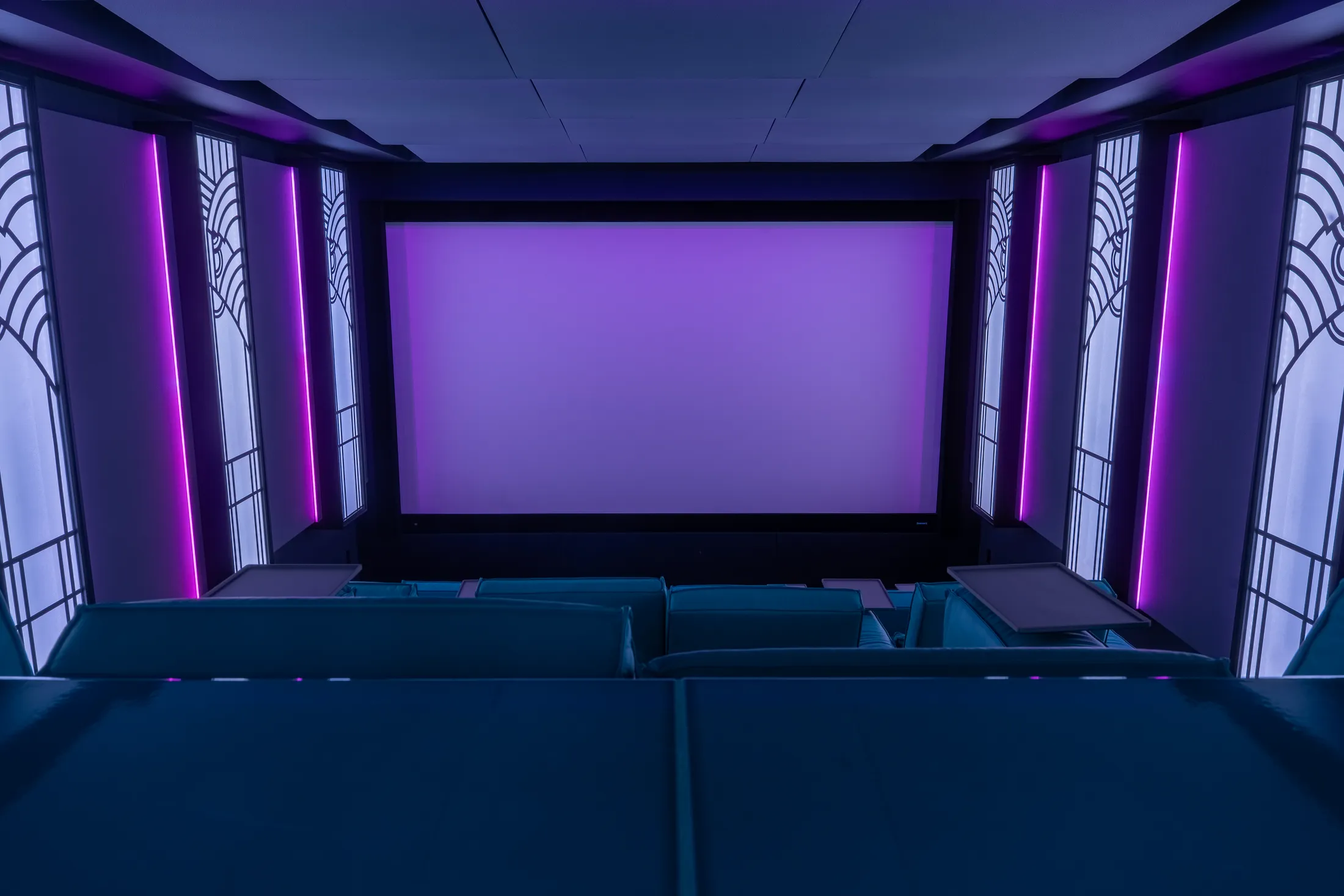
A private cinema in an oceanfront estate, washed in blue light
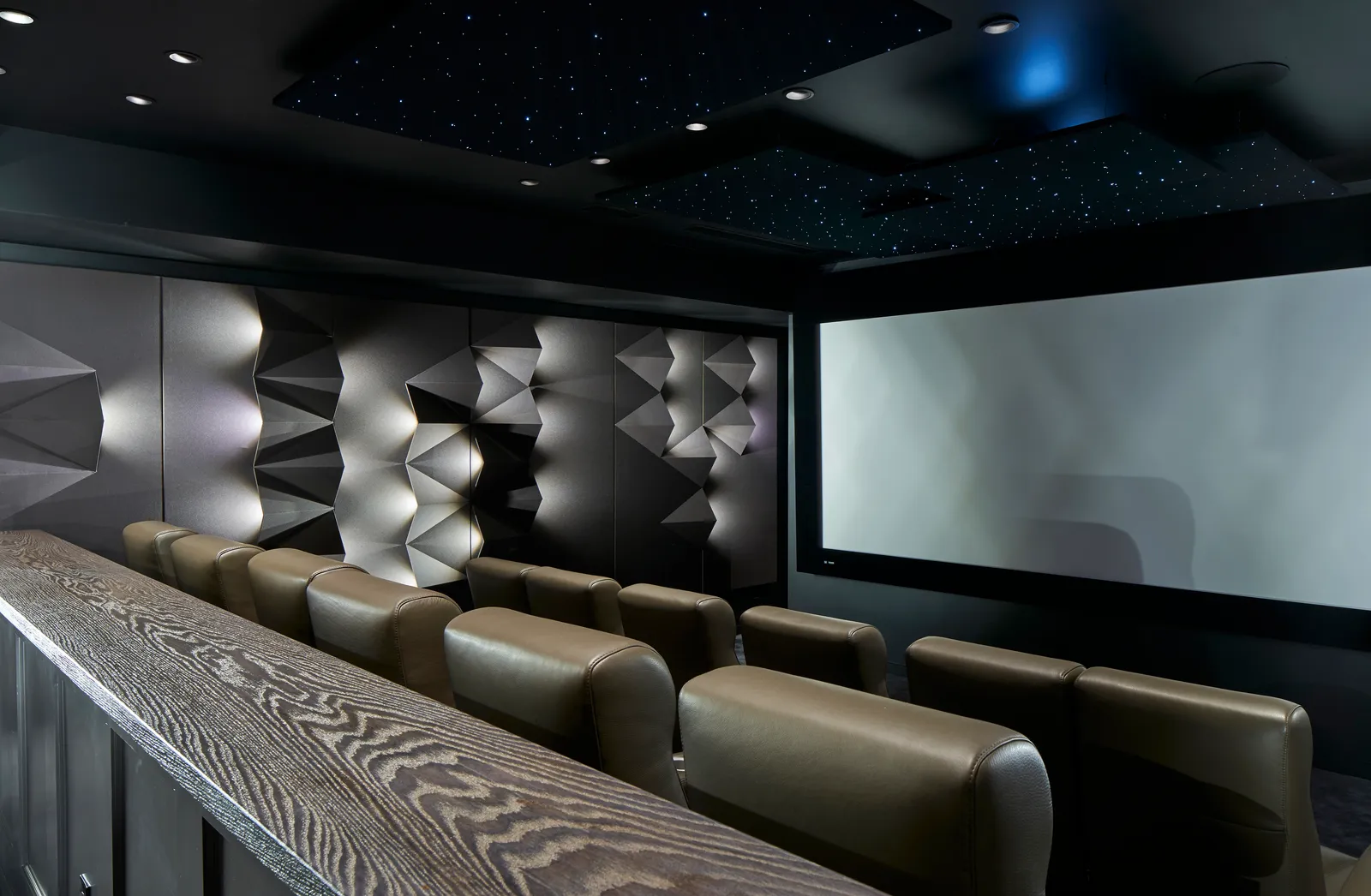
A dedicated theater from the rear, tiered leather seating toward the screen
An estate cinema in teal light, Cineak leather seating

We design and build our theaters in partnership with CinemaTech, whose seating, acoustics, and finishes set the standard for the private cinema. Elevated Integration is HTA Certified — Luxury and a CEDIA Awards Finalist.

Common questions

Do I need a dedicated room?
Not necessarily. A dedicated theater is the purist's choice: a light-controlled room built around the screen, with reference picture and sound and nothing competing with the film. A media room gives you a big picture and real sound in a space you also live in, shifting from social to cinematic on one press. If you watch seriously and can commit a room, go dedicated; if the room needs to do more than one job, a media room is often the better answer.
How much space does a theater need?
There is no single number. A dedicated theater rewards a room you can control: enough depth for tiered seating and the right throw to the screen, and walls that can be treated for sound. A media room works within the space you have. We size the screen, seating, and acoustics to your room in design, rather than forcing your room to a spec.
What does a home theater cost?
It depends on the room, the level, and the elements you choose: a media-room upgrade and a dedicated reference theater are different projects. Rather than quote a number that means nothing out of context, we give you honest ranges once we understand the room and the ambition.
How long does it take?
Typically a few months from design to calibration, depending on scope and whether the room is part of new construction or an existing space. Design and acoustic engineering come first; the build and calibration follow. We plan the schedule around your project from the first meeting.
Can you build one into an existing room?
Yes. Many of our theaters and media rooms are retrofits. Where walls can't be opened we plan around it; where they can, we treat the room properly for sound. The constraints of an existing room are part of the design, not a barrier to it.
Will it disturb the rest of the house?
That is what acoustic isolation is for. We engineer the room so the sound is full inside and quiet next door: decoupled construction, treatment calculated to the space, and doors and details that hold the sound in. Done right, the theater is loud only where you want it.
Artisanal craftsmen working with modern technology. The result is technically mind-blowing but aesthetically beautiful at the same time.
Kaloma S.

Design your theater.

Tell us how you want to watch, and the room you have in mind. We'll take it from there.

212-634-9091 · Discretion assured.