
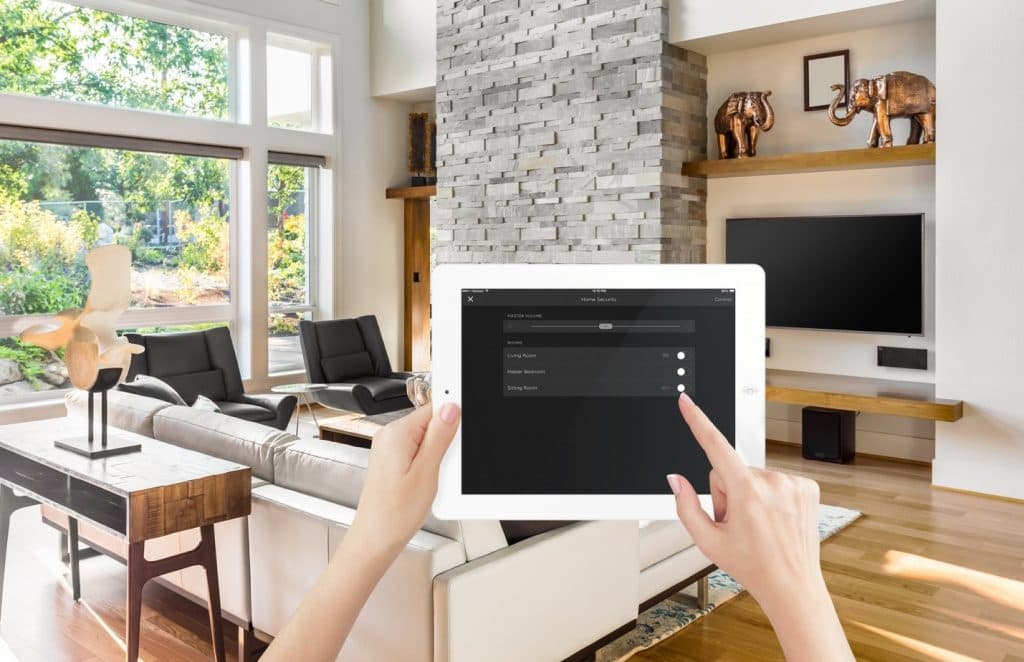
Automation gets talked about as a pile of gadgets. It is better understood as a single layer beneath the house — lighting, sound, climate, and control — that lets the architecture stay quiet while the home does the work. For anyone in and around New York City feeling outnumbered by their own devices, that is the point: fewer things to manage, not more.
The easiest place to begin is lighting control. Instead of hunting for switches, the lights in a room, a wing, or the whole house answer to one interface, and a single press can hold a scene — an evening setting, an away setting that darkens the house as you leave, a schedule that keeps an empty home looking lived-in.
From there it compounds. Whole-home audio lets a single source follow you from room to room. Smart locks and video entry turn the front door into something you can see and control from anywhere, and hand access to the people you choose without being home to do it.
The real shift arrives when those systems stop being separate. One gesture on the way out dims the lights, locks the doors, and sets the house to away. One gesture on the sofa draws the shades, lowers the lights, and starts the film. The more the pieces know about each other, the less the house asks of you.
That coordination is what we design and install, and it is why the technology, done properly, is the part you never notice.